
How to Unclog a Shower or Floor Drain
Written for the floor trap in a Filipino bathroom, not the basement drain the rest of the internet keeps describing.
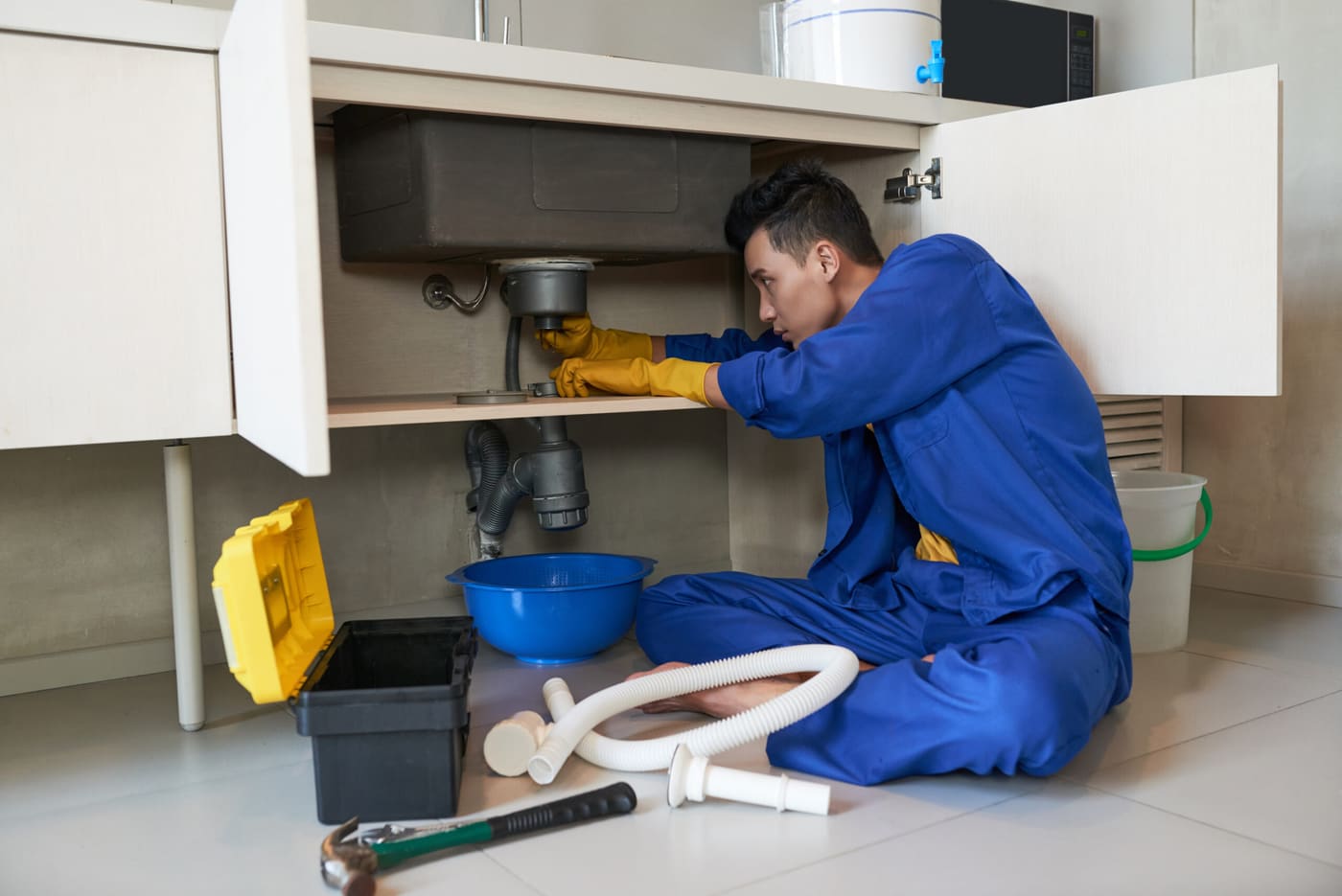
Library photograph, for illustration.
Search for a clogged floor drain and you will be reading about basements within about four seconds. Pour boiling water down it, snake the branch line, check the cleanout plug in the cellar.
Almost no house in Central Luzon has a cellar.
What a Filipino bathroom has is a floor trap: a small grated drain set into a wet floor, with a shallow water seal under it, taking everything the tabo and the shower send across the tiles. It blocks for its own reasons and it clears in its own way. Here is how we do it, and where we would stop and ring someone.
What is actually blocking it
Nine times out of ten, when we lift the grate on a slow shower or floor drain, it is one of these:
- Hair, bound together with soap scum into a mat that sits right under the grate
- Sabon and shampoo residue, which coats the inside of the pipe and narrows it a little more every month
- Sand and grit walked in from outside, which settles in the trap and never leaves on its own
- Bits of plastic, sachet corners and hair ties that went through the grate and stayed
- A trap that has dried out, which is a smell problem rather than a drainage one
If the water is not draining AND the smell is bad, treat them as two separate faults. They usually are.
Start at the grate, not at the bottle
Most blocked floor drains are cleared standing up, with gloves on, in about ten minutes. Work in this order and stop as soon as the water moves.
Step 1: Lift the grate. Some lift straight out, some are held by two screws. Put the screws somewhere they cannot roll into the drain.
Step 2: Pull out what you can see. Gloves, then fingers, then a bent length of stiff wire with a small hook on the end. A hair mat usually comes out in one piece and is a genuinely unpleasant thing to look at.
Step 3: Scoop out the grit. There is almost always sand sitting in the trap below the grate. A spoon you do not like works better than anything designed for it.
Step 4: Flush it with hot water. Hot from the tap or from a kettle left to stand a minute. Not boiling, for reasons below. Two or three litres, poured steadily rather than tipped.
Step 5: Put the grate back and run the shower for a minute. If it drains at full flow and holds, it is done.
If it is still slow: the plunger and the snake
A shower drain that is clear at the grate but still backing up has its blockage further along, past the trap. Two tools reach it.
A cup plunger, the flat kind rather than the folded-out flange used for toilets, seals well against a flat tiled floor. Run enough water to cover the rubber, seat it over the drain, and work it firmly for fifteen or twenty seconds. Firmly and slowly beats fast and shallow every time, because what moves the blockage is the water in the pipe, not the air.
A hand auger, a snake, is the next step. Feed it down through the trap, turn the handle clockwise as it goes, and you will feel it catch. Pull back slowly. Whatever comes up with it is what was blocking you.
If the snake reaches the end of its length and never catches on anything, the blockage is beyond what a household tool reaches. That is the point to stop.
What to keep out of it
Liquid sosa is the first thing most people reach for and the one we would take off the shelf.
Caustic soda gives off real heat as it works. In a shallow floor trap it sits in standing water and heats it, which is how people get burned lifting a grate an hour later. In older waste pipes it attacks the pipe as readily as the clog. And when it does not clear the blockage, which is often, it leaves a drain full of caustic water for whoever tries next, including us.
Boiling water straight from the kettle belongs on the same list. It is fine in a metal pipe and it is not fine poured onto ceramic or into the PVC most bathrooms here are plumbed with. Let it stand a minute first.
Repeated doses of any chemical cleaner are the worst version of this. If one did not work, a second will not either, and now the pipe has had two.
When it is not the drain at all
Some of what people call a clogged floor drain is a problem somewhere else in the system showing up at the lowest opening in the house. The floor trap is usually that opening, which is why it is the first thing to overflow.
Ring somebody rather than keep plunging if any of these is true:
- More than one fixture is slow at the same time, for example the shower and the toilet together
- Water rises in the floor drain when you flush the toilet or empty the washing machine
- It backs up during heavy rain and settles afterwards, which points at the drainage outside rather than the pipe inside
- What comes up is not water
- The same drain blocks again within a few weeks of being cleared
What we do when we come out
Mechanical snakes, hydro jetting and eco-friendly solutions, which is what our drain page has always said. A snake or a jet takes the blockage out. A chemical tries to dissolve it and works on the pipe while it does.
That difference matters most in the houses where it is hardest to fix afterwards: older builds where the waste pipe runs under a concrete slab and replacing it means breaking the floor.
If your drain is doing something on the second list, or you have cleared it twice this month, ring us and describe what you are seeing. Yotubero covers Pampanga, Bulacan, Bataan, Tarlac and Olongapo.
Rather have someone look at it?
Call Yotubero and describe what you are seeing. We will tell you whether it needs a visit and what that visit costs.
Emergency line open 24/7 Booked jobs Mon to Sun, 8AM to 8PM